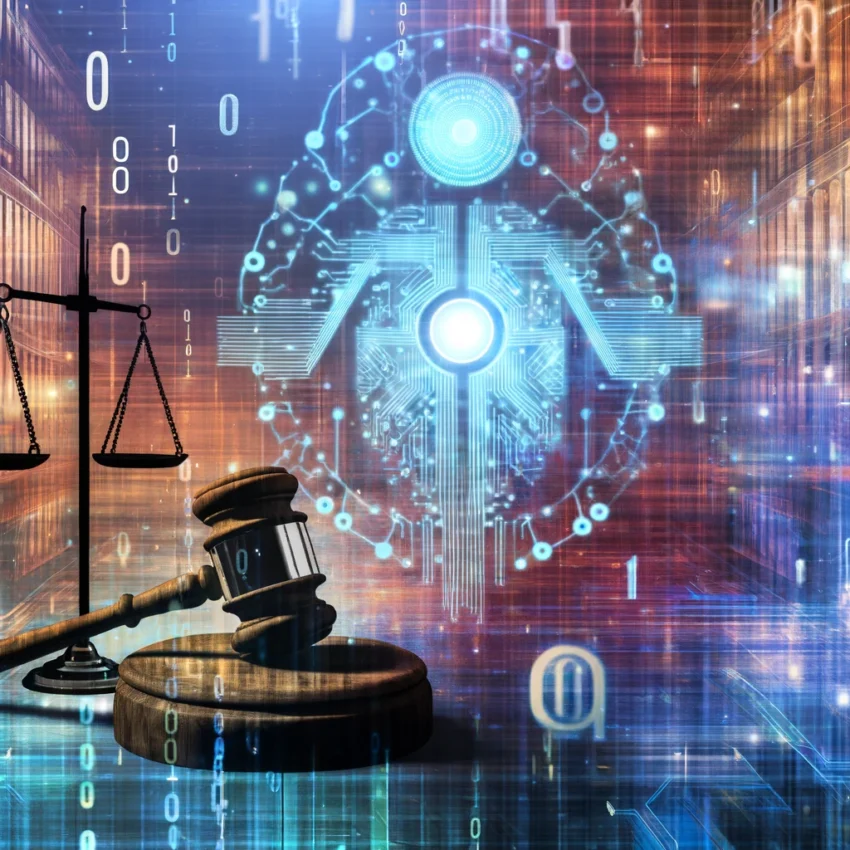
As a paralegal who ventured into the legal realm after nearly two decades in IT, my career has been anything but ordinary. My experience in software development laid the groundwork for a unique approach to legal challenges, particularly in the fast-paced world of tech startups. It’s this blend of backgrounds that inspired me to develop an AI legal assistant, leveraging the power of the open-source Mistral 7B model, all running on an NVIDIA RTX 3070 GPU. This project represents the intersection of my past and present.
The Road to Innovation
Combining my background in IT to the legal services realm become a call to innovate. With a solid two decades of experience in technology, I witnessed firsthand the transformative power of software solutions. When I stepped into the legal field, I brought with me a vision to meld these worlds together, crafting tools that could enhance the precision and efficiency of legal work. The AI legal assistant project was born from this vision, I want to address the specific demands and challenges of Swedish business law.
Unveiling Mistral 7B
At the heart of my AI legal assistant is Mistral 7B, a model known for its robust capabilities in processing and generating text. This open-source powerhouse, coupled with the computational power of an NVIDIA RTX 3070 GPU, forms the backbone of my project. Mistral 7B’s adaptability made it the perfect candidate for training on the intricacies of Swedish business law, enabling the development of a tool that’s highly specialized.
The AI Legal Assistant: Pros and Cons
Pros
- Efficiency Boost: The AI assistant dramatically cuts down research time, allowing for quicker, more focused legal analysis and strategy development.
- Accuracy and Up-to-Dateness: With the model’s capacity for continuous learning, the assistant stays abreast of the latest in Swedish business law, ensuring that our advice and documents reflect current legal standards.
- Minimization of Human Error: Leveraging AI reduces the risk of oversights, enhancing the reliability of our legal outputs.
Cons
- Limitations in Complex Reasoning: Despite its strengths, the AI assistant can’t fully replicate the nuanced decision-making and complex reasoning that seasoned legal professionals provide.
- Ongoing Maintenance: The tool requires constant updates to keep up with legal changes, a task that demands time and resources.
- Data Privacy Concerns: Employing AI in legal work raises important questions about client confidentiality and data security, necessitating strict safeguards.
Emphasizing Security with Local Processing
Running Mistral 7B locally on an NVIDIA RTX 3070 GPU ensures that sensitive client information is processed securely, within our own systems. This setup is crucial for maintaining the confidentiality of our work, especially given the sensitive nature of legal matters in tech startups.
The Future of AI in Legal Work
This project is more than just a personal experimental tool; it’s a step toward reimagining the potential of AI in legal services. By combining my background in IT with my current role as a paralegal, I’ve created a tool that not only makes our day-to-day tasks more efficient but also ensure accuracy and security in legal assistance. As we look forward, the role of AI in the legal field is set to grow, promising a future where legal professionals can rely on technology to enhance their work, reduce errors, and safeguard client information.
In crafting this AI legal assistant, I’ve bridged my past in software development with my present in legal services, showcasing the transformative potential of technology in law. This journey underscores the importance of innovation and adaptability, promising a future where legal practices are more efficient, accurate, and secure.