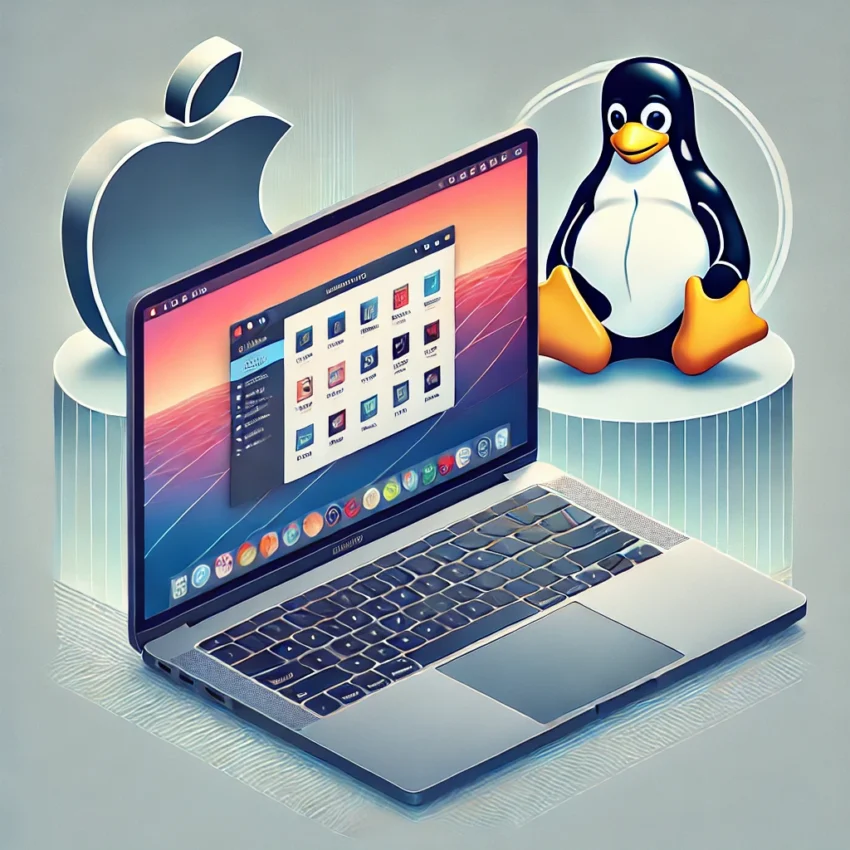
With the introduction of Apple’s M-series chipsets, the landscape of Mac computing has dramatically shifted. Mac users, once loyal to their Intel-powered machines, are now flocking to the newer, faster, and more efficient M1, M1 Pro, M2, and beyond. This migration has left a surplus of Intel-based Macs on the used market, creating a unique opportunity for a particular group of tech enthusiasts: the Linux community.
The Changing Market: Intel Macs vs. M-series Macs
Since the release of the first M1 Macs in late 2020, Apple users have been quick to embrace the significant performance and power efficiency improvements brought by Apple’s in-house silicon. The M1, with its ARM architecture, boasts impressive benchmarks, rivaling and often surpassing Intel’s offerings in both performance and battery life. As a result, Intel Macs have become less desirable among the Apple faithful, driving down their resale value.
For example, a 2019 MacBook Pro with an Intel Core i7 processor, 16GB of RAM, and a 512GB SSD might now sell for around $700 to $900 on the used market. Just a couple of years ago, this machine would have commanded well over $1,500. In contrast, the latest M1 MacBook Air with similar RAM and storage options typically retails for $999 to $1,200, making the older Intel models seem less attractive to those set on staying within the Apple ecosystem.
The Linux Opportunity
While PC users tend to stick to their preferred brands and systems, often showing little interest in Macs, Linux users might find the current market dynamics particularly advantageous. Intel Macs are known for their premium build quality, excellent displays, and robust hardware, all of which can be utilized to create an exceptional Linux machine.
Here’s why a used Intel Mac could be a perfect fit for Linux:
- Build Quality: MacBooks and iMacs are renowned for their design and construction. The unibody aluminum design, high-resolution Retina displays, and solid keyboards make them a pleasure to use—qualities that are often missing in similarly priced Windows laptops.
- Hardware Specifications: Many Intel Macs from 2015 onward come equipped with powerful Intel processors, sufficient RAM, and fast SSDs. For example, a 2015 MacBook Pro might feature a quad-core Intel Core i7 processor, 16GB of RAM, and a 512GB SSD—specs that are more than sufficient for running most Linux distributions smoothly.
- Price Point Comparison: When comparing similarly priced Windows laptops on the used market, you might find that the $700 to $900 range offers lower build quality, less attractive displays, and potentially weaker hardware specifications. A used PC at this price might have a plastic chassis, a lower-resolution display, and comparable or even less RAM and storage.
- Linux Compatibility: Contrary to popular belief, Linux runs quite well on Intel Macs. While the M1 and M2 Macs are still catching up in terms of Linux support due to their new architecture, Intel-based Macs are much more straightforward to configure. Distributions like Ubuntu, Fedora, and Arch Linux have been successfully installed and run smoothly on these machines.
What You Get: Intel Mac vs. Used PC at the Same Price
Let’s break down what you might get for your money if you’re spending around $800:
- Used Intel Mac (e.g., 2017 MacBook Pro):
- Intel Core i5 or i7 Processor
- 8GB or 16GB RAM
- 256GB or 512GB SSD
- 13-inch Retina display with 2560×1600 resolution
- Premium build quality with an aluminum unibody chassis
- Excellent keyboard and trackpad
- Used PC Laptop (e.g., 2017 Dell XPS 13):
- Intel Core i5 or i7 Processor
- 8GB or 16GB RAM
- 256GB SSD
- 13.3-inch FHD display (1920×1080 resolution)
- Mixed build quality (some models are aluminum, others plastic)
- Varying quality in keyboard and trackpad
Usefulness of Intel Macs for Linux
The usefulness of Intel Macs extends beyond just the hardware. The Linux community can benefit from the versatility these machines offer:
- Portability and Battery Life: While the M1 MacBooks have significantly improved battery life, Intel MacBooks are no slouch, often providing 7-10 hours on a single charge depending on usage.
- Dual-Boot Capabilities: You can easily dual-boot macOS and Linux on Intel Macs, offering the flexibility to switch between operating systems as needed.
- Ecosystem Integration: If you are already invested in the Apple ecosystem (e.g., iPhone, iPad), using an Intel Mac with Linux doesn’t completely sever those ties. You can still use macOS when necessary.
Conclusion: A Smart Choice for the Linux Enthusiast
In summary, used Intel Macs represent an underappreciated niche in the market, particularly for Linux users. These machines offer premium hardware and solid performance at prices that are often better than comparable used PCs. With the declining demand among traditional Mac users, Linux enthusiasts can take advantage of this trend and acquire high-quality machines that offer excellent value for money.
So, if you’re in the market for a new Linux machine, don’t overlook the used Intel Mac. It might just be the perfect balance of performance, quality, and price that you’ve been searching for.