*** Note: This article is not part of my AI experiment; it is simply a summary of my study notes **
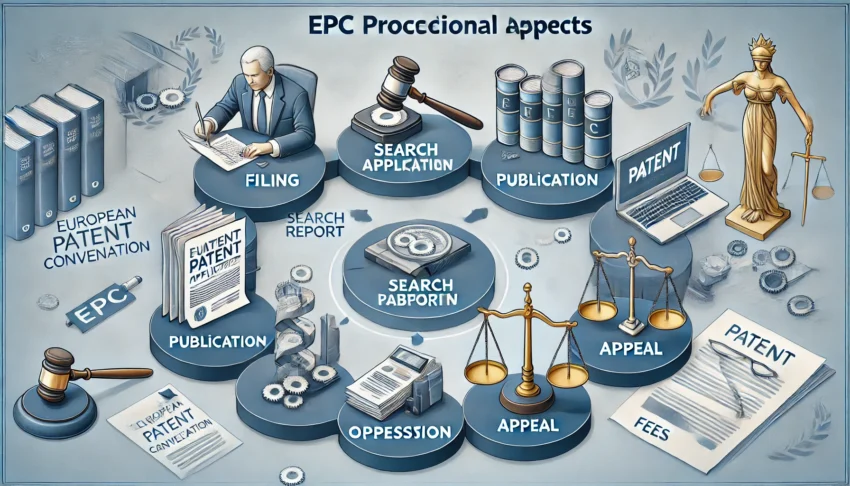
Understanding the procedural intricacies of the European Patent Convention (EPC) is paramount for anyone involved in filing and prosecuting European patent applications. This comprehensive guide walks you through the key steps—from filing your application to handling oppositions and appeals—ensuring you are well-prepared to secure patent protection.
Filing a European Patent Application
Initiating the patenting process begins with filing a European patent application. The filing date is a critical milestone, establishing the priority date, which is crucial for determining novelty and priority over other applications. Under Article 80, the application is accorded a filing date when it contains at least:
- An indication that a European patent is sought.
- Information identifying the applicant.
- A description or reference to a previously filed application.
The essential contents of the application are outlined in Article 78, which requires:
- A request for the grant of a European patent.
- A detailed description of the invention.
- Claims defining the scope of protection sought.
- Any drawings referred to in the description or claims.
- An abstract summarizing the invention.
The Search Report
Once the application is filed, the European Patent Office (EPO) conducts a thorough search to identify relevant prior art. As mandated by Article 92, the search report lists documents that might impact the patentability of the invention. This report is communicated to the applicant under Rule 61, typically accompanied by an initial opinion on the patentability of the invention based on the identified prior art.
Publication of the Application
Following the preparation of the search report, the application and the search report are published, in accordance with Article 93. This publication, which occurs 18 months from the filing or priority date, makes the details of the invention publicly accessible. It marks a significant step as it opens the application to public scrutiny and potential opposition.
Examination Procedure
The substantive examination process begins upon the applicant’s request, as outlined in Article 94. During this phase, the EPO examines whether the application meets the EPC requirements, including novelty, inventive step, and industrial applicability. Detailed in Article 97, this examination concludes with either the grant or refusal of the patent. If the application meets all requirements, the patent is granted; otherwise, it is refused.
Opposition Procedure
Post-grant, the patent can be opposed by third parties within nine months of the publication of the grant, as per Article 99. Grounds for opposition, specified in Article 100, include lack of novelty, inventive step, and insufficient disclosure of the invention. The examination of the opposition is governed by Article 101, where the EPO reviews the arguments and evidence before deciding to maintain, amend, or revoke the patent.
Appeal Procedure
Adverse decisions during the examination or opposition phases can be appealed under Article 108. Grounds for appeal, outlined in Article 106, allow for a comprehensive review of the contested decision. Governed by Article 111, the appeal process involves a detailed re-examination by the Boards of Appeal, which can uphold, amend, or overturn the initial decision.
Fees
Navigating the European patent application process involves several fees, each critical at different stages:
- Filing Fee: €130 (online) / €210 (paper), payable at the time of application submission (Rule 38).
- Search Fee: €1,330, covering the costs of the search report (Rule 39).
- Examination Fee: €1,825, payable when requesting substantive examination (Rule 70).
- Designation Fee: €610, covering the designation of contracting states.
- Renewal Fees: These fees, required to maintain the patent application or granted patent in force, vary by year (Article 86).
Time Limits
Adhering to prescribed time limits is essential to avoid the loss of rights. Rule 131 details the calculation of these limits, ensuring precise adherence to deadlines. In specific cases, extensions of time limits may be granted under Rule 132, providing additional time to fulfill requirements or respond to EPO communications.
Understanding these procedural aspects and navigating them effectively is critical for securing robust patent protection in Europe. Mastery of these steps ensures smooth progression through the patenting process and compliance with EPC requirements.