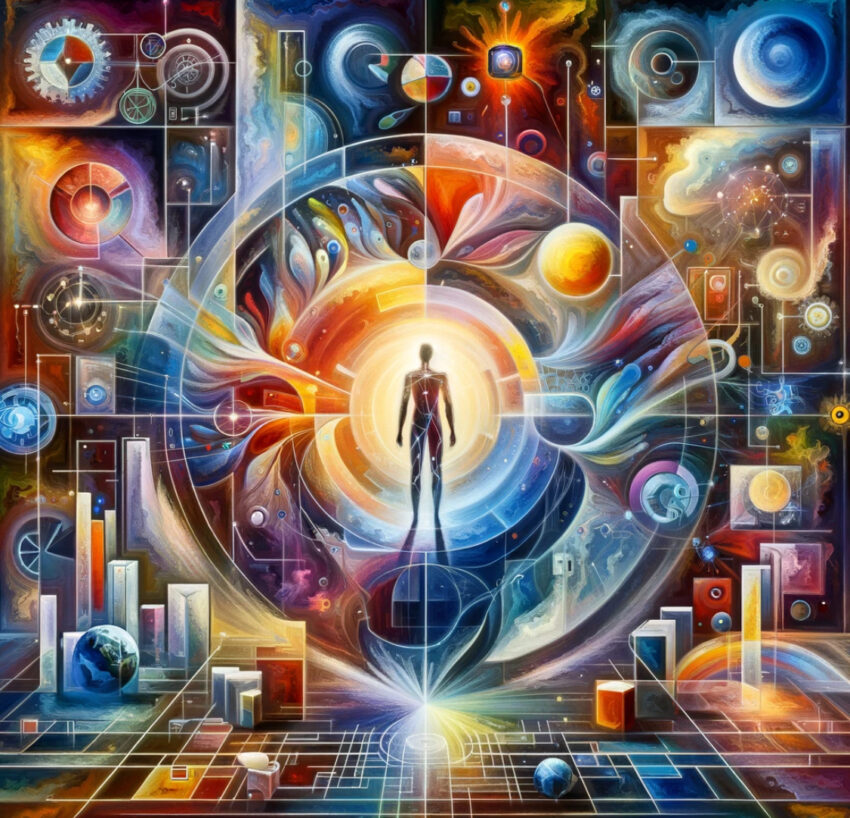
In an age where the only constant is change, the value of broadening one’s horizons cannot be overstated. We stand on the brink of a monumental shift, reminiscent of the transformation from agricultural societies to industrial powerhouses, yet now we venture into the uncharted territories of the information and AI era. As we navigate through this transformation, the concept of being a Renaissance man or woman—possessing a versatile and expansive skill set—becomes not just valuable but essential.
The Need for a Holistic Approach
The world today is a tapestry of complexities, woven with threads of technological advancements, political instability, climate change, and an ever-growing demand for energy. In such times, the ability to adapt and innovate across multiple disciplines is a lifeline. The Renaissance individuals of the 21st century are those who can draw on a diverse range of knowledge and skills to address the multifaceted challenges we face.
Beyond Specialization: The Versatile Mind
While specialization has its merits, the future belongs to those who can think broadly. The unknowns of the information and AI era require us not just to solve existing problems but to foresee potential challenges and opportunities. This calls for a holistic understanding of various fields, from technology and science to humanities and arts. A versatile mind can see connections where others see divides, enabling innovative solutions that transcend traditional boundaries.
Adapting to a World in Flux
The pace of change today is unprecedented. What was revolutionary yesterday becomes obsolete tomorrow. In such a world, versatility is more than an asset; it’s a means of survival. The ability to learn, unlearn, and relearn is crucial. Renaissance men and women thrive in this environment, their broad knowledge base and adaptive skills allowing them to pivot and prosper amidst uncertainty.
The Power of Interdisciplinary Thinking
The challenges of the 21st century—be it climate change, political unrest, or the ethical dilemmas posed by AI—cannot be tackled in isolation. They demand an interdisciplinary approach, combining insights from science, technology, social sciences, and beyond. The modern Renaissance individual, with their wide-ranging expertise, is uniquely positioned to lead these conversations, bridging gaps and fostering collaborations that drive progress.
Cultivating Renaissance Qualities in the Information Age
Becoming a Renaissance person today means embracing lifelong learning. It involves curiosity and an openness to explore beyond one’s comfort zone. The internet and digital platforms offer unprecedented access to knowledge, making it possible for anyone to cultivate a broad skill set. From online courses and webinars to podcasts and virtual reality experiences, the tools for broadening one’s knowledge are at our fingertips.
The Call for Renaissance Leaders
As we confront the challenges of our time, we need leaders who embody the Renaissance spirit—visionaries who can navigate complexity with wisdom and creativity. These individuals will lead by example, showing that the richness of human knowledge and the potential for innovation lie in our ability to integrate diverse perspectives and skills.
Embracing the Renaissance Ethos
In an era defined by rapid change and uncertainty, the ethos of the Renaissance man and woman—curiosity, versatility, and a commitment to learning—is more relevant than ever. By fostering these qualities, we can equip ourselves to navigate the future, whatever it may hold, with confidence and agility. The Renaissance of the 21st century is here, and it calls on each of us to be its pioneers, ready to explore, understand, and shape the unknown landscapes of the information and AI era.